ReallyRepresent.orgCopy reviewed October 25, 2026

Does Karen DeSanto really represent you?

Wisconsin deserves representation closer to its people than to party leadership.

On major issues, DeSanto takes positions aligned with national party leadership and well outside the views of ordinary Wisconsinites. From your family’s choices to your workplace freedoms, her positions put the party’s agenda ahead of the safeguards Wisconsin families deserve.

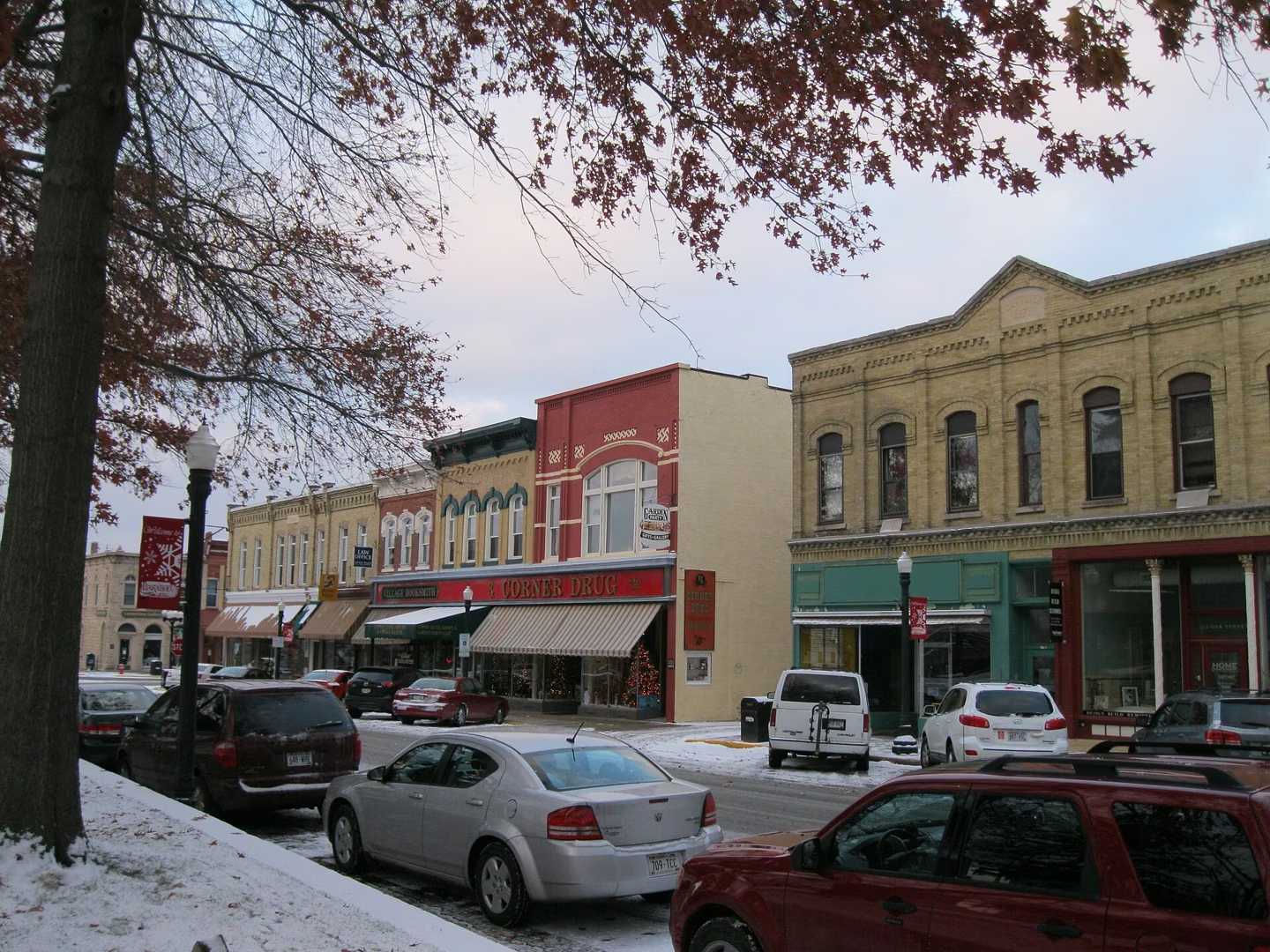
East Oak Street in downtown Baraboo.

For voters across the Baraboo, Portage, Sauk Prairie and Spring Green areas of Assembly District 40 in Sauk and Columbia counties.

DeSanto’s 2025–26 legislative actions below are from her service in the State Assembly.

Cost of living

Voted against data-center utility and water safeguards

DeSanto voted against requiring large data centers to cover their utility costs and meet water-use safeguards, leaving your electric bill and your environment unprotected.

Voted no: AB840

Read the record: AB840

DeSanto voted no on AB840 in the Assembly.

Outcome: Assembly passed with Assembly Substitute Amendment 1 January 20, 2026, 53–44. Senate recorded no floor concurrence and recorded the bill as failed to concur in on March 23, 2026. It did not become law.

The Assembly substitute applies to large centers using more than 20 gigawatt-hours annually or at least 100 megawatts of load, with common-ownership aggregation. It protects other utility customers from covered utility costs, requires qualifying cooling and annual water-use reporting, and adds on-site renewable-generation, reclamation/security and qualified local-hiring provisions. Existing-center exceptions apply to specified requirements.

Cosponsored mandatory union membership and payments

You should be able to keep your job without being required to join or pay a union. DeSanto cosponsored repealing Wisconsin’s right-to-work protections.

Sponsored: SB458

Read the record: SB458

DeSanto cosponsored SB458 at introduction.

Outcome: Senate did not pass SB458; it failed to pass March 23, 2026. Assembly recorded no passage of SB458. It did not become law.

SB458 would restore all-union agreements subject to Wisconsin Employment Relations Commission voting and referendum safeguards. DeSanto was named as a representative cosponsor at introduction on October 2, 2025.

Voted against banning tax increases through partial vetoes

Tax and fee increases should require legislators’ approval. DeSanto voted against a constitutional amendment that would stop a governor from using partial vetoes to create or increase taxes or fees.

Voted no: SJR116

Read the record: SJR116

DeSanto voted no on SJR116 in the Assembly.

Outcome: Senate adopted January 21, 2026, 18–15. Assembly concurred as amended February 19, 2026, 54–41. Senate concurred in Assembly Substitute Amendment 3 March 17, 2026, 18–15. Published as Enrolled Joint Resolution 14; the amendment is submitted to voters at the November 3, 2026 election. Voter approval is required before the constitution changes.

The acted-on Assembly Substitute Amendment 3 retains the tax-and-fee partial-veto prohibition and changes the resolution’s submission provisions.

Elections

Voted against voter photo ID in the constitution

It should be easy to vote and hard to cheat. Election integrity is foundational to our republic, worthy of constitutional protection.

Voted no: SJR2

Read the record: SJR2

DeSanto voted no on SJR2 in the Assembly.

Outcome: Senate adopted January 8, 2025, 17–15. Assembly concurred January 14, 2025, 54–45. Voters approved the constitutional amendment in the April 1, 2025 referendum; the resolution was published as Enrolled Joint Resolution 1.

The resolution concerns constitutional protection of photo ID, including legislative authority for exceptions and provisional ballots.

Sports and campus rights

Voted against protections for girls’ and women’s sports

DeSanto voted against bills that would have protected girls’ and women’s sports and kept biological males out of female locker rooms. Girls and women deserve fair competition and private spaces.

Voted no: AB100, AB102

Read the record: AB100, AB102

School sports

AB100 would set biological-sex eligibility rules for school sports.

Voted no: AB100

DeSanto voted no on AB100 in the Assembly.

Outcome: Assembly passed March 20, 2025, 51–43. Senate concurred February 11, 2026, 18–15. Governor vetoed March 31, 2026; the bill did not become law.

The amended bill retains mixed-team rules and would designate multi-user school locker rooms, including shower rooms, for exclusive use by one biological sex, defined by the original birth certificate. It covers public schools, including charter schools, and private schools participating in parental-choice programs. Ordinary use of female-designated locker rooms would exclude biological males. Exceptions permit entry for custodial work, maintenance or inspection, medical assistance, specified employees performing their duties, children assisted by family or guardians, disability assistance, and emergencies or safety drills. Schools could temporarily redesignate rooms for the opposite sex during special events. Written requests trigger reasonable accommodations, such as single-occupancy or regulated staff locker-room use, and ADA accommodations remain permitted.

College sports

AB102 would set biological-sex eligibility rules for UW and technical-college sports.

Voted no: AB102

DeSanto voted no on AB102 in the Assembly.

Outcome: Assembly passed March 20, 2025, 50–43. Senate concurred February 11, 2026, 18–15. Governor vetoed March 31, 2026; the bill did not become law.

The amended bill retains mixed-team rules and would designate multi-user UW and technical-college locker rooms, including shower rooms, for exclusive use by one biological sex, defined by the original birth certificate. Ordinary use of female-designated locker rooms would exclude biological males. Exceptions permit entry for custodial work, maintenance or inspection, medical assistance, specified employees performing their duties, children assisted by family or guardians, disability assistance, and emergencies or safety drills. Institutions could temporarily redesignate rooms for the opposite sex during special events. Written student requests trigger reasonable accommodations, such as single-occupancy or regulated staff locker-room use, and ADA accommodations remain permitted. These provisions do not extend to all private colleges.

Voted against campus free-speech and fair-hearing protections

Students need to question ideas and debate controversial subjects without fear of punishment. When accused of misconduct, they need access to the evidence and an impartial decision-maker so they can defend themselves before their education is disrupted.

Voted no: SB498

Read the record: SB498

DeSanto voted no on SB498 in the Assembly.

Outcome: Senate passed November 18, 2025, 17–16. Assembly concurred February 12, 2026, 53–45. Governor vetoed March 20, 2026; the bill did not become law.

The bill protects academic freedom and requires notice, access to evidence, counsel or an advocate, and impartial roles in disciplinary proceedings. More than one due-process violation within five years triggers a two-year tuition freeze; UW institutions also face a corresponding funding reduction. Biennial surveys assess First Amendment rights, academic freedom, bias and self-censorship. Annual instruction covers academic freedom, due process and First Amendment protections.

Voted against ending racial discrimination in college aid

Racism has no place in Wisconsin. DeSanto voted against race-neutral standards in college aid programs.

Voted no: SB652

Read the record: SB652

DeSanto voted no on SB652 as amended in the Assembly on February 12, 2026.

Outcome: Senate passed January 21, 2026. Assembly concurred as amended February 12, 2026, 53–45; Senate concurred in the Assembly amendment February 18. Governor vetoed March 20; the veto was sustained May 13, 2026. The bill did not become law.

The amended bill uses individualized social and economic disadvantage, including financial information and a personal narrative, without considering race or sex. It also changes recruitment and retention priorities and removes specified medical- and dental-school minority-enrollment conditions.

Children and unborn life

Coauthored allowing abortion even just before birth

DeSanto coauthored allowing abortion, at any stage, for any reason that the patient’s medical provider judges “necessary.” DeSanto’s bill allows abortion “at any time during the pregnancy if an abortion is necessary in the professional judgment of the individual’s medical provider.” It does not define “necessary” or list qualifying reasons, leaving it entirely to the provider’s discretion.

Sponsored: AB355

Read the record: AB355

DeSanto coauthored AB355 at introduction.

Outcome: Assembly did not pass AB355; it failed to pass March 23, 2026. Senate recorded no passage of AB355. It did not become law.

Introduced section 11 allows abortion “at any time during the pregnancy if an abortion is necessary in the professional judgment of the individual’s medical provider.” It does not define “necessary” or enumerate qualifying reasons or limit necessity to saving the mother’s life.

Coauthored taxpayer-funded abortion for public employees

DeSanto’s abortion bill would require abortion coverage in state and participating local-government employee plans that cover maternity care. You should not be forced to pay for another person’s abortion.

Sponsored: AB355

Read the record: AB355

DeSanto coauthored AB355 at introduction.

Outcome: Assembly did not pass AB355; it failed to pass March 23, 2026. Senate recorded no passage of AB355. It did not become law.

Introduced sections 1–5 remove existing coverage restrictions and require abortion and related medical-service coverage in state and Group Insurance Board plans if they cover maternity care. Section 20 separately repeals the prohibition on abortion coverage in exchange plans; it permits that coverage rather than requiring it. The bill retains the separate conscience provision in section 253.09.

Voted against protecting kids from irreversible sex-change surgeries

DeSanto voted against restrictions on surgeries, puberty blockers, and cross-sex hormones for minors, despite the low quality of the evidence used to justify those measures. The harms are well documented and permanent, including sterility, sexual dysfunction, impaired bone density accrual, cardiovascular problems, and later regret.

Voted no: AB104

Read the record: AB104

DeSanto voted no on AB104 in the Assembly.

Outcome: Assembly passed March 20, 2025, 50–43. Senate concurred February 11, 2026, 18–15. Governor vetoed March 31, 2026; the bill did not become law.

AB104 covers specified surgeries, puberty blockers, cross-sex hormones and referrals for people under 18. Exceptions cover specified sex-development-disorder treatment, treatment of complications, and procedures necessary to avert imminent death or impairment of a major bodily function. Professional-license enforcement and a six-month tapering transition apply.

Schools

Voted against federal scholarship tax credits for Wisconsin

DeSanto voted against requiring Wisconsin to participate in the federal scholarship tax-credit program. Families could use the scholarship for tuition, tutoring, materials, technology, and other eligible expenses.

Voted no: AB602

Read the record: AB602

DeSanto voted no on AB602 in the Assembly.

Outcome: Assembly passed November 19, 2025, 54–44. Senate concurred January 21, 2026, 18–15. Governor vetoed March 30, 2026; the bill did not become law.

AB602 would require the governor to elect participation in the federal scholarship tax-credit program, which begins in 2027, and provide for scholarship-organization lists and certification.

Voted against timely access to classroom materials

Parents need to know what their children are taught. DeSanto voted against requiring schools to allow no-cost inspection of covered classroom materials within 14 days and an online list of adopted textbooks.

Background: A 2021 report by the Wisconsin Institute for Law & Liberty concluded that political agendas are pervasive in Wisconsin classrooms and that parental inspection of teaching materials is difficult, costly, and subject to months-long delays. Examples in the report included no response from Sheboygan after three months and an estimated $5,250 charge from Madison for records from seven teachers.

Voted no: AB5

Read the record: AB5

DeSanto voted no on AB5 in the Assembly.

Outcome: Assembly passed February 19, 2025, 54–43. Senate concurred October 14, 2025, 18–15. Governor vetoed October 31, 2025; the bill did not become law.

The bill preserves copyright protections and existing public-records rights. The Senate rejected Senate Amendment 1; no substantive amendment was adopted.

Voted against restoring nationally aligned school-testing standards

Parents need consistent standards to judge their children’s academic progress. DeSanto voted against realigning Wisconsin standardized test scoring with the National Assessment of Educational Progress.

Voted no: AB1

Read the record: AB1

DeSanto voted no on AB1 in the Assembly.

Outcome: Assembly passed February 19, 2025, 54–44. Senate concurred March 18, 2025, 18–14. Governor vetoed March 28, 2025; the bill did not become law.

It uses 2019–20 report-card thresholds and descriptions, NAEP-aligned Forward English and math classifications, and 2021–22 PreACT/ACT classifications.

Voted against parental consent for student name and pronoun changes at school

DeSanto voted against requiring parental authorization before changing records for student names or pronouns. Parents know their children best and have primary constitutional authority to direct their upbringing, education, and care.

Voted no: AB103

Read the record: AB103

DeSanto voted no on AB103 in the Assembly.

Outcome: Assembly passed March 20, 2025, 50–43. Senate concurred February 11, 2026, 18–15. Governor vetoed March 31, 2026; the bill did not become law.

Assembly Amendment 1 requires written, notarized parental or guardian authorization for covered minor-pupil record changes and staff use of names or pronouns not aligned with biological sex. Pupils 18 or older submit their own notarized requests; specified shortened names are excepted.

Land ownership

Voted against restrictions on foreign-adversary land purchases

DeSanto voted against a bill restricting land purchases by specified foreign-adversary principals. Wisconsin land should not become a foothold for governments hostile to the United States.

Voted no: SB7

Read the record: SB7

DeSanto voted no on SB7 in the Assembly.

Outcome: Senate passed its version January 21, 2026, 18–15. Assembly concurred with Assembly Substitute Amendment 1 January 22, 2026, 55–42. Senate concurred in that substitute February 18, 2026. Governor vetoed March 20, 2026; the bill did not become law.

The Assembly substitute covers real property beyond farmland, defined foreign principals and 50%-controlled entities, prospective acquisitions, divestiture and forfeiture, with visa and permanent-resident exclusions. It separately prohibits condemnation for wind and solar development.